Special double issue: Why organic farming will save agriculture.
This monographic issue includes a dossier on organic farming, its evolutionary stages since the last century, current laws, regulations, and principles, an overview of scientific research on the enormous potential for the development of life and fertility in organic soils and landscapes, and many other articles. 204 pages to keep, study, with the possibility of contacting each author and reading each link in the notes online. The second year of Terra Biodinamica’s rebirth ends on a high note.
Marco Serventi – Rebuilding the meaning of the Earth: a Dossier on organic farming
DOSSIER BIO 2025:
Carlo Triarico – Understanding the origins of organic farming to understand its meaning
Valentina Carlà – What is organic: a look at regulatory foundations, guiding principles, strengths, and critical issues
Federica Ferrario – How the ecological transition in agriculture was betrayed
Grazia Trebbi – The language of crystalline forms: a comparison between organic and non-organic products
Alessandro Piccolo – Humus, umeoma, and soil health
Riccardo Bocci – New seed systems for organic farming
Fiorella Belpoggi – Sustainability and organic farming
Claudio Serafini – A journey through the Europe of the future
Lucio Cavazzoni – Living in the countryside and the mountains: organic farming that builds communities
Luigi Montano – Organic agroforestry and “eubiotic” foods: a model of resilience for soil, food, and environmental health
END OF DOSSIER
Maurizio Agostino – An ecological proposal for caring for the land and social change
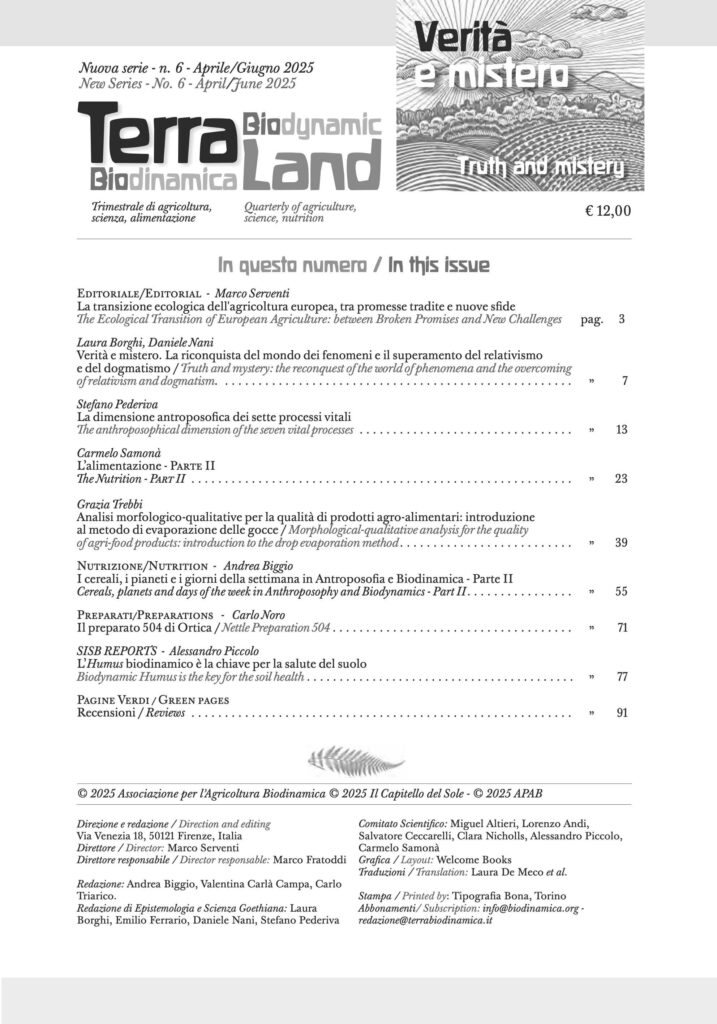
The new issue of Terra Biodinamica features the title of the first article by Laura Borghi and Daniele Nani: Truth and Mystery.
The reductionist approach to science and the perception of the world has produced, among other effects, a perceptual and inner desertification that greatly reduces human cognitive possibilities. Following this is Stefano Pederiva’s contribution, which introduces an important point of observation: the seven vital processes from the anthroposophical perspective. Carmelo Samonà’s journey into the world of holistic nutrition continues with the second of the four planned parts in print. A new topic on image analysis for water droplet evaporation—to discover the quality of products and substances—is introduced with an article by Grazia Trebbi. For the nutrition column, Andrea Biggio’s exploration of grains, planets, and days of the week continues. Carlo Noro’s important column on biodynamic preparations covers preparation 504 from Urtica dioica, and Alessandro Piccolo continues his essential contribution to sharing scientific research on biodynamic agriculture. Finally, a review of the new book published by Capitello del Sole, Agroecology: Guidelines, which heralds the near future of organics.
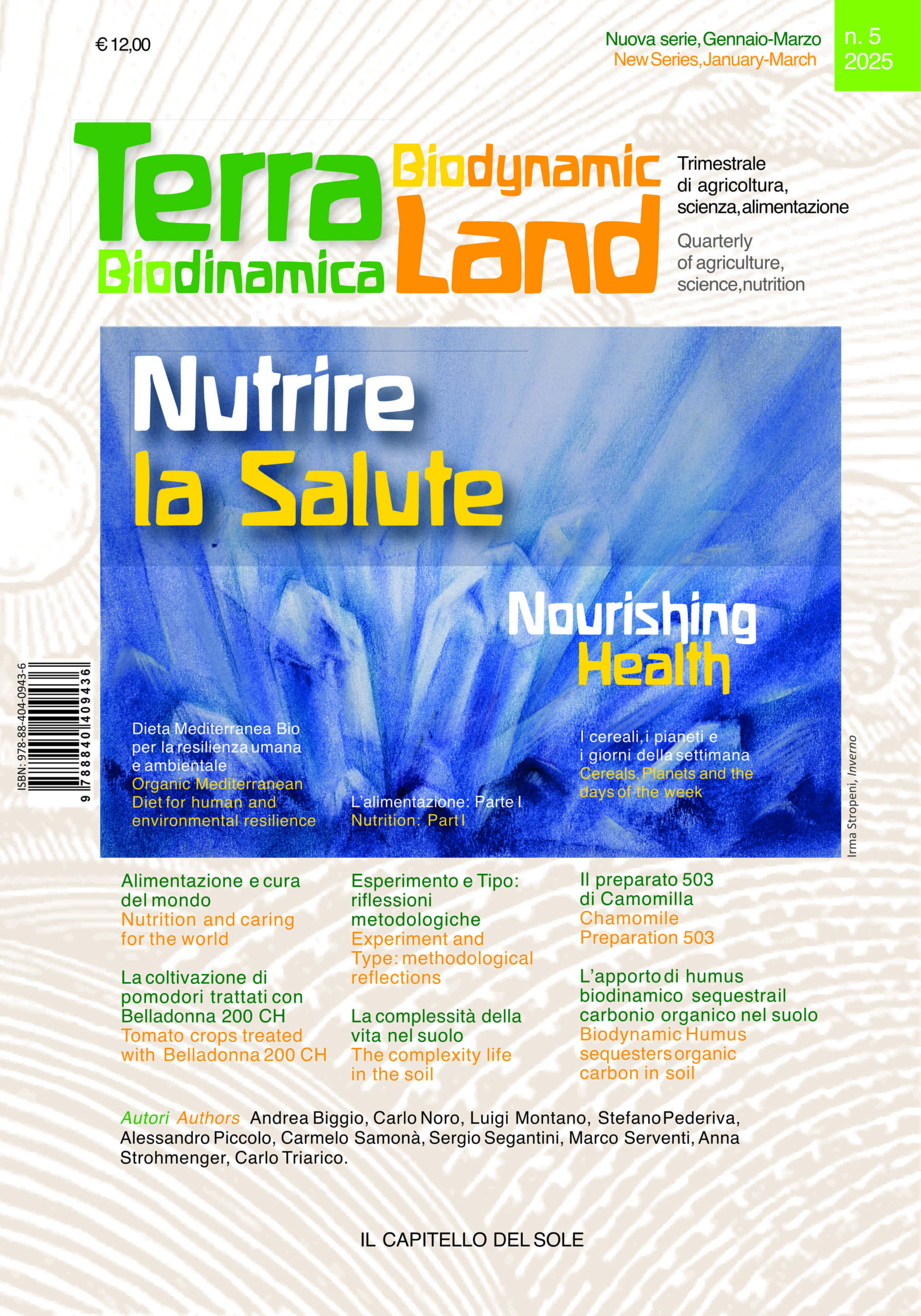
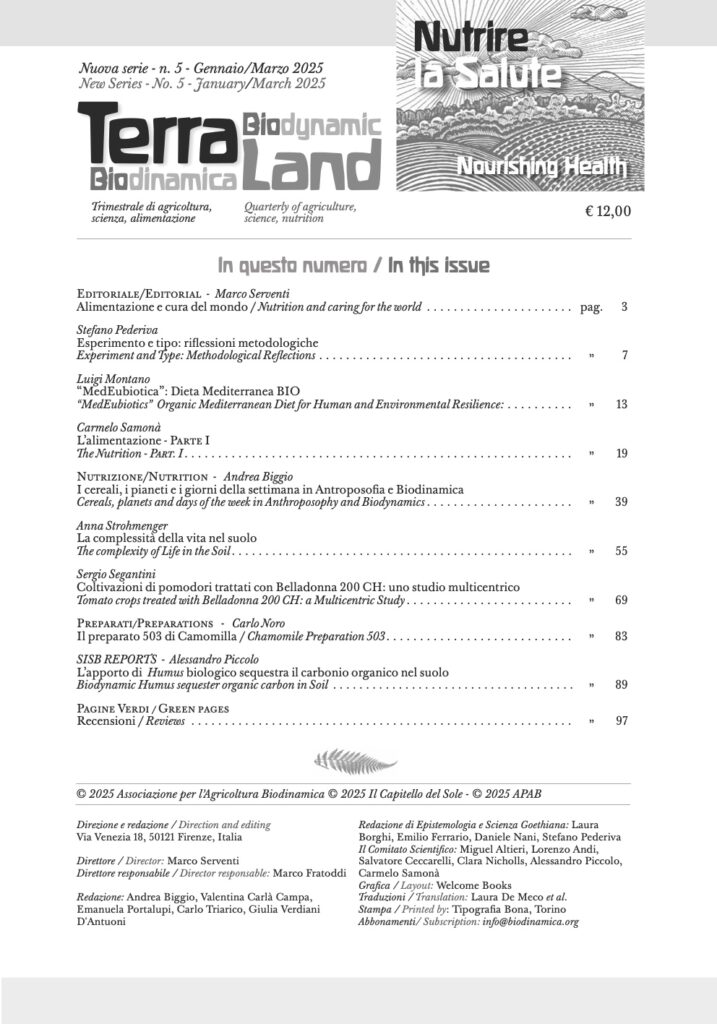
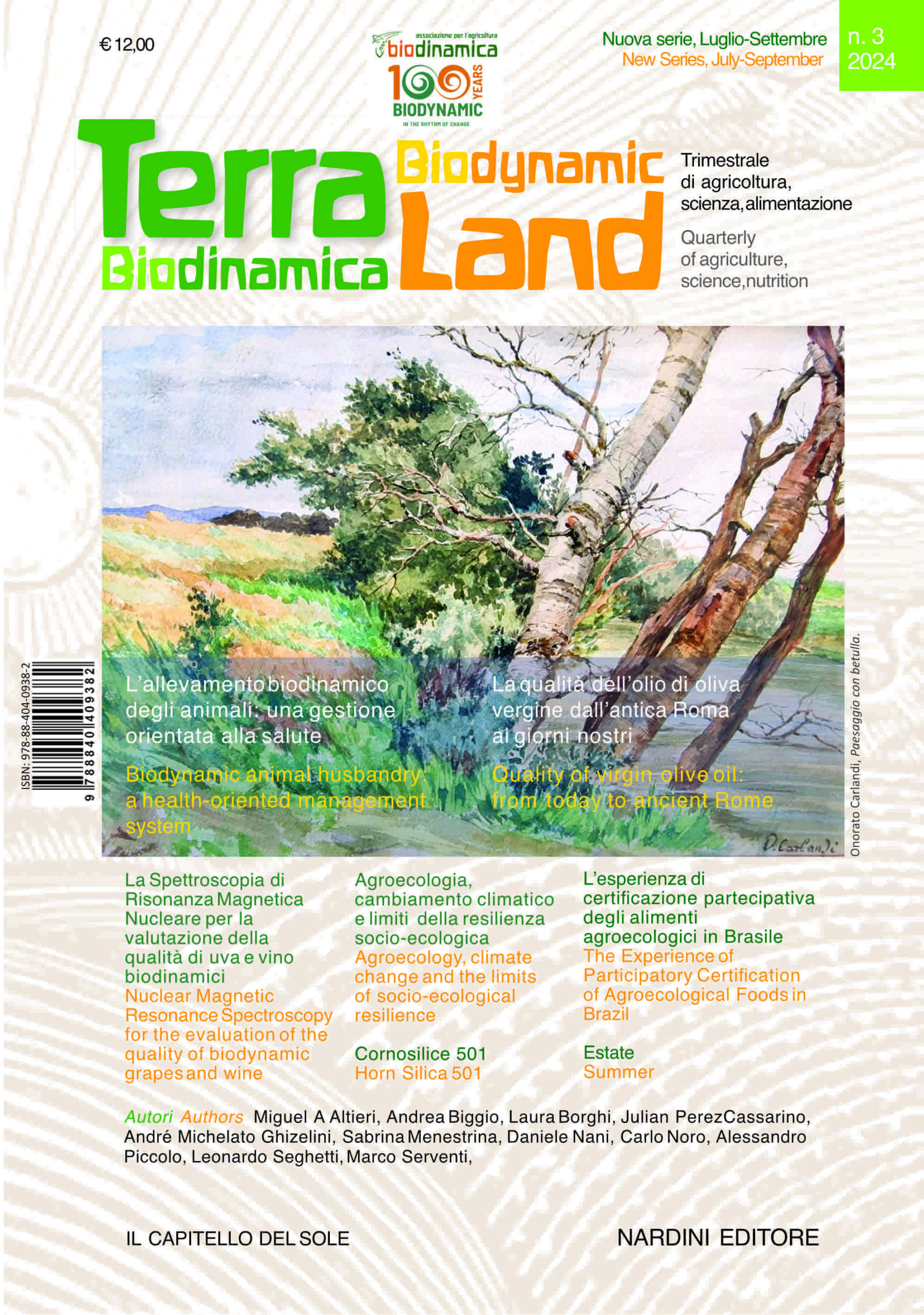
Due to significant delays caused by publisher changes, the magazine is releasing issue no. 5 with a focus on nutrition and food. This issue marks the start of the magazine’s second year, which will feature further innovations and changes: a work in progress designed to become a useful tool for a vision of agriculture suited to the times.
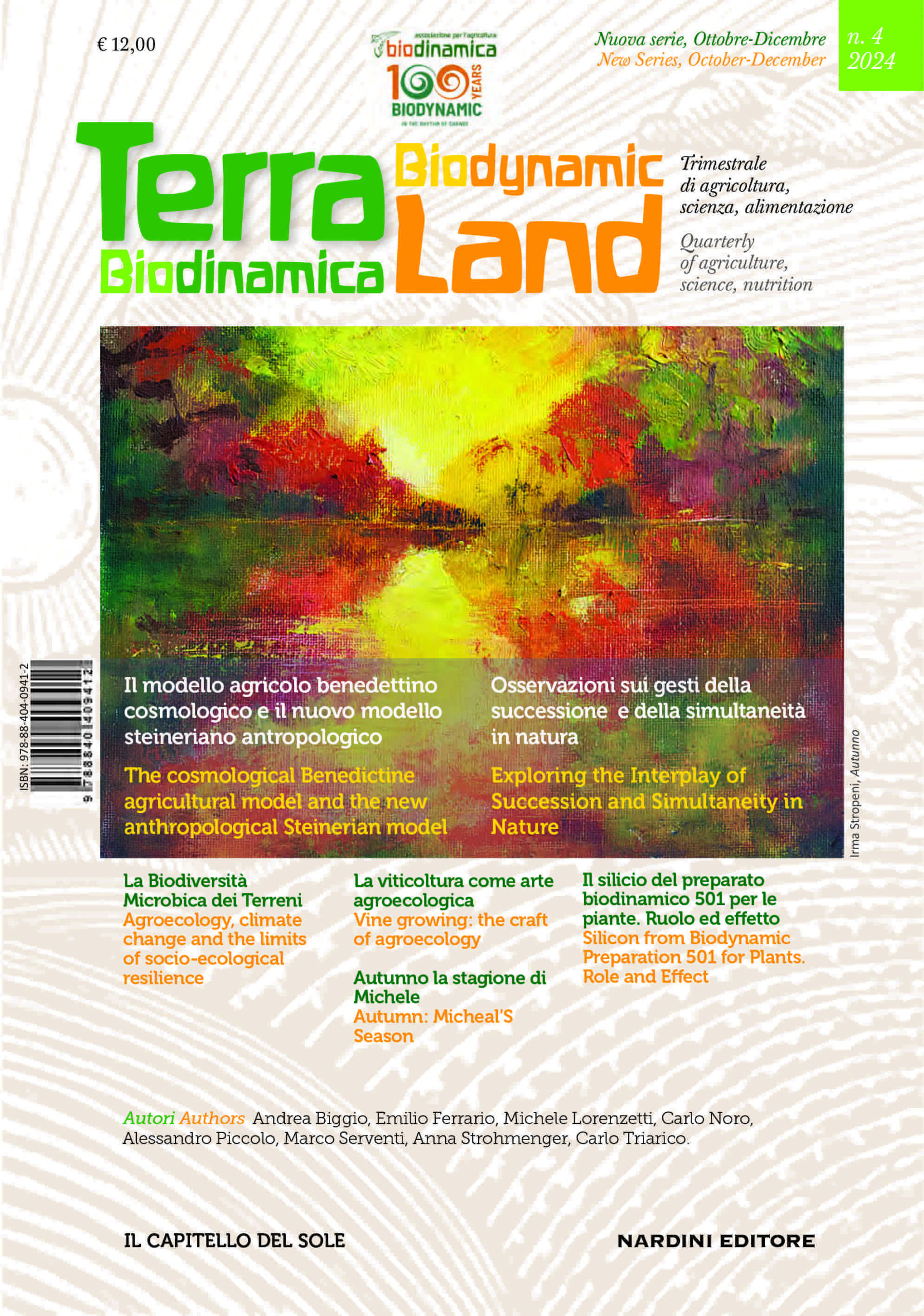
Issue no. 4, now available, concludes the first year of our quarterly magazine with original in-depth articles useful for every farmer or enthusiast of biodynamic agroecology.
The best known biodynamic preparation is ‘horn manure’ or Preparation 500, which according to Steiner’s instructions is obtained by filling a cow horn with only fresh cow dung and burying it in the autumn for 6 months. The result is a dark-brown, high-humification compost product, which, dissolved in water and shaken vigorously, is almost completely soluble and ready to be distributed as a spray on the soil of the biodynamic farm commonly in doses of 300 g.ha-1 at least twice a year to promote the microbiological processes of the soil and humification of organic matter. In reality, despite the eccentricity of the preparation, Biodynamic Preparation 500 is nothing more than the product of the slow humification of manure under anaerobic conditions.
Its molecular complexity is comparable with that of the humic biostimulants used in conventional agriculture. However, whereas the humification process of the latter is commonly geochemical (lignites, oxidised carbons), due to chemical-physical factors, biodynamic humus is the molecular resultant of a biotic action and therefore retains a higher biological charge than humic substances of geochemical origin. Nevertheless, these latter humic materials also exhibit bioactivity, mainly based on their content in biostimulant molecules (Canellas and Olivares, 2014). This is expressed towards crops for soil application doses that can generally range from 3 to 40 kg.ha-1, although increased rhizobial nodule formation has been reported for the leguminous plant Sesbania aculeata with soil application of only 600 mg ha-1 (Rose et al., 2014), or increased photosynthetic activity and quality of peppers with only 400 g.ha-1 for both soil and leaf applications (Karakurt et al., 2009). Doses of humus solutions of geochemical origin corresponding even to only 20 and 30 g.ha-1 were found to be biostimulating rice growth in field experiments for foliar and rhizosphere applications, respectively (Nandakumar et al., 2004).
The bioactivity of the humified material in Preparation 500 was attributed to its auxin-like activity based on an in-depth study of its biological and biochemical properties (Giannattasio et al., 2013). In this work, the evaluation of the population of microorganisms present on three different 500 preparations indicated the predominance of gram-positive species and a lower abundance of Actinobacteria and Gammaproteobacteria, whose presence is consistent with the anaerobic conditions of low redox potential and consequent slow proteolysis and fermentation brought about by the underground humification of horn manure in the absence of oxygen. A metagenomic analysis of the preparations also determined a significant prevalence of bacteria over fungi, whose ratio of 6:1 was much higher than is generally obtained for an aerobic compost or from an agrarian soil where there is substantial equivalence between bacteria and fungi. Humus from the 500 preparations also revealed high values of enzyme activity representing a strong potential for inducing biological and chemical fertility in the soil. This study further revealed that anaerobic humus from horn manure, distributed to the soil at a dose of 200 g. ha-1, would confer auxin-like molecules a nanomolar (10-10) concentration in the circulating soil solution, which would be more than sufficient to induce an effective biostimulant action in the rhizospheric apparatus, when even only femtomolar (10-15) concentrations of biologically active molecules are described in the literature as capable of activating molecular signals of cell stimulation (Giannattasio et al, 2013).
A detailed study on the molecular composition of the same three 500 preparations was conducted by applying solid-state Nuclear Magnetic Resonance Spectroscopy (13C-CPMAS-NMR) and thermochemolytic pyrolysis coupled with gas chromatography/mass spectrometry (Spaccini et al., 2012). Both techniques revealed a very complex structure with a predominance of aromatic lignin derivatives, polysaccharides, and alkyl compounds. The distribution of carbon compounds obtained by NMR showed a weak hydrophobic character in the three humified preparations and a significant contribution of lignocellulosic phenols compared to what is commonly observed in composts obtained aerobically. The thermochemolysis results also indicated a high content of lignin derivatives in these humified materials, suggesting a slower and less advanced decomposition of lignin due to the anaerobiosis under which the underground humification took place and the consequent lower presence of ligninolytic fungi, as highlighted elsewhere (Giannattasio et al., 2013). The high content of lignin derivatives and polar components of biotic origin agrees with the results of the biological characteristics, in giving the Humus of Preparation 500 an objective potential biostimulating activity of plant growth.
The results obtained indicate the need not only to standardise the molecular and biotic content of Humus in preparation 500, but also to assess its bioactivity towards agricultural crops in more numerous studies, both in vitro and in vivo, in order to certify its specificity with respect to aerobic compost and lignite Humus. The Italian Society of Biodynamic Sciences (SISB) is the forum best placed to bring together the different disciplines (chemical, biological, biochemical and physiological) required to achieve these common goals in a rigorously scientific manner.
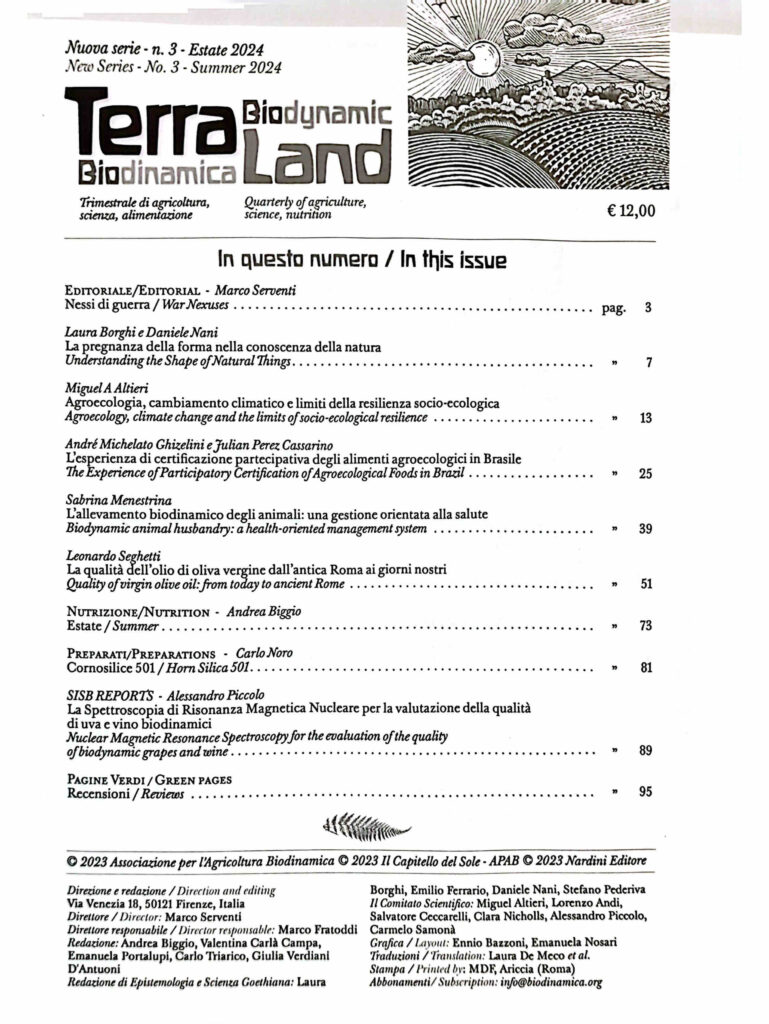
The third issue has been released, enriched by a new Scientific Committee and an Epistemological Editorial Board that support the work of the central editorial team.
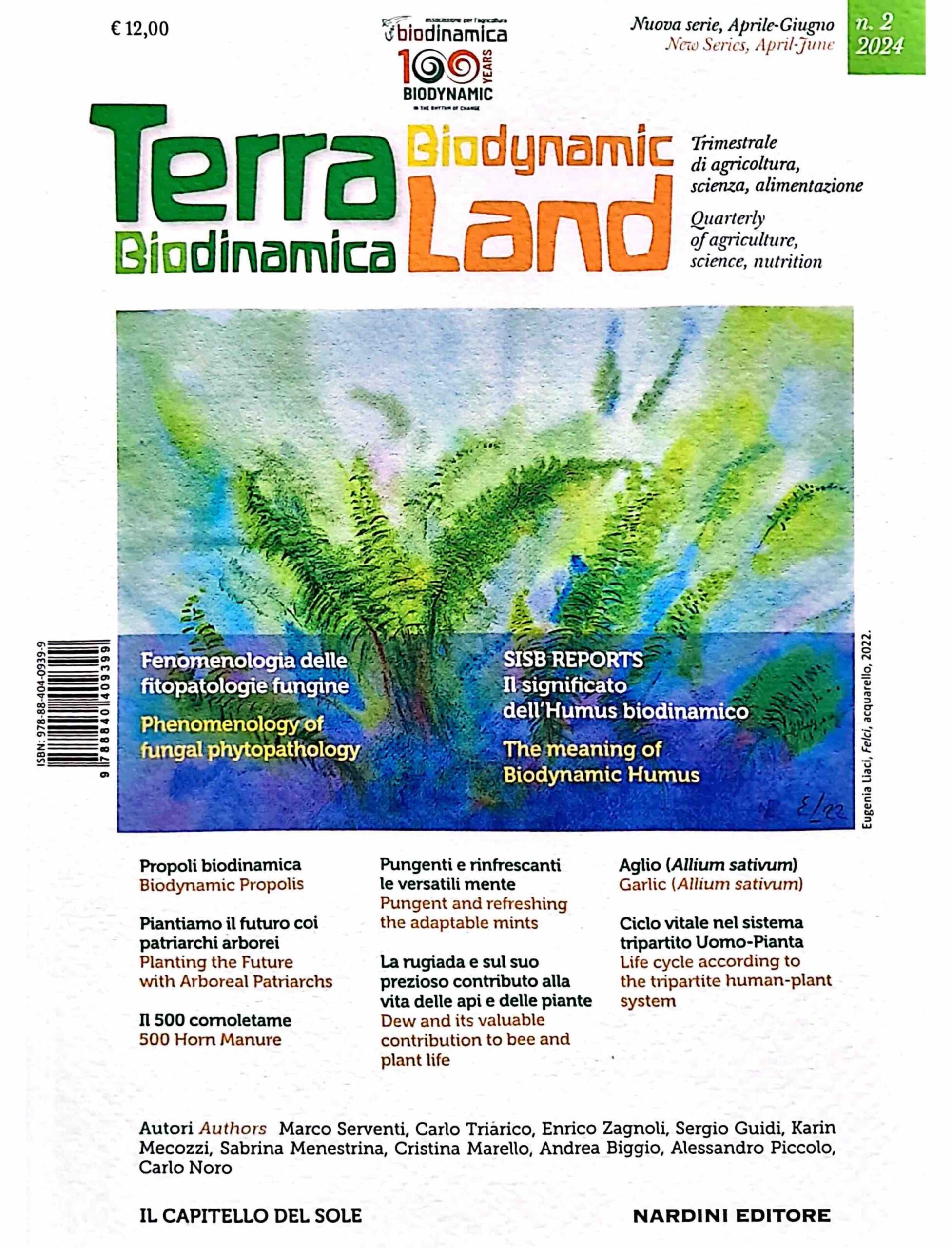
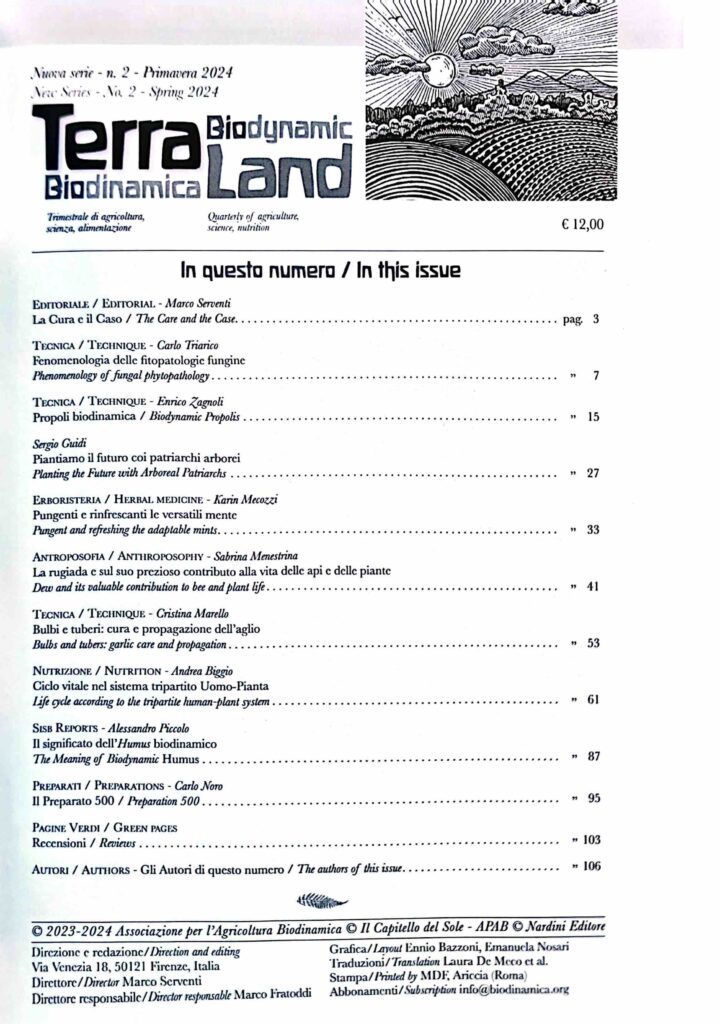
The Spring issue features a substantial number of articles, which you can see in the index below. The cover image is an original watercolor of Ferns, a gift from the artist Eugenia Liaci. An excerpt from Prof. Piccolo’s article in the SISB (Italian Society for Biodynamic Sciences) column in this issue: click here
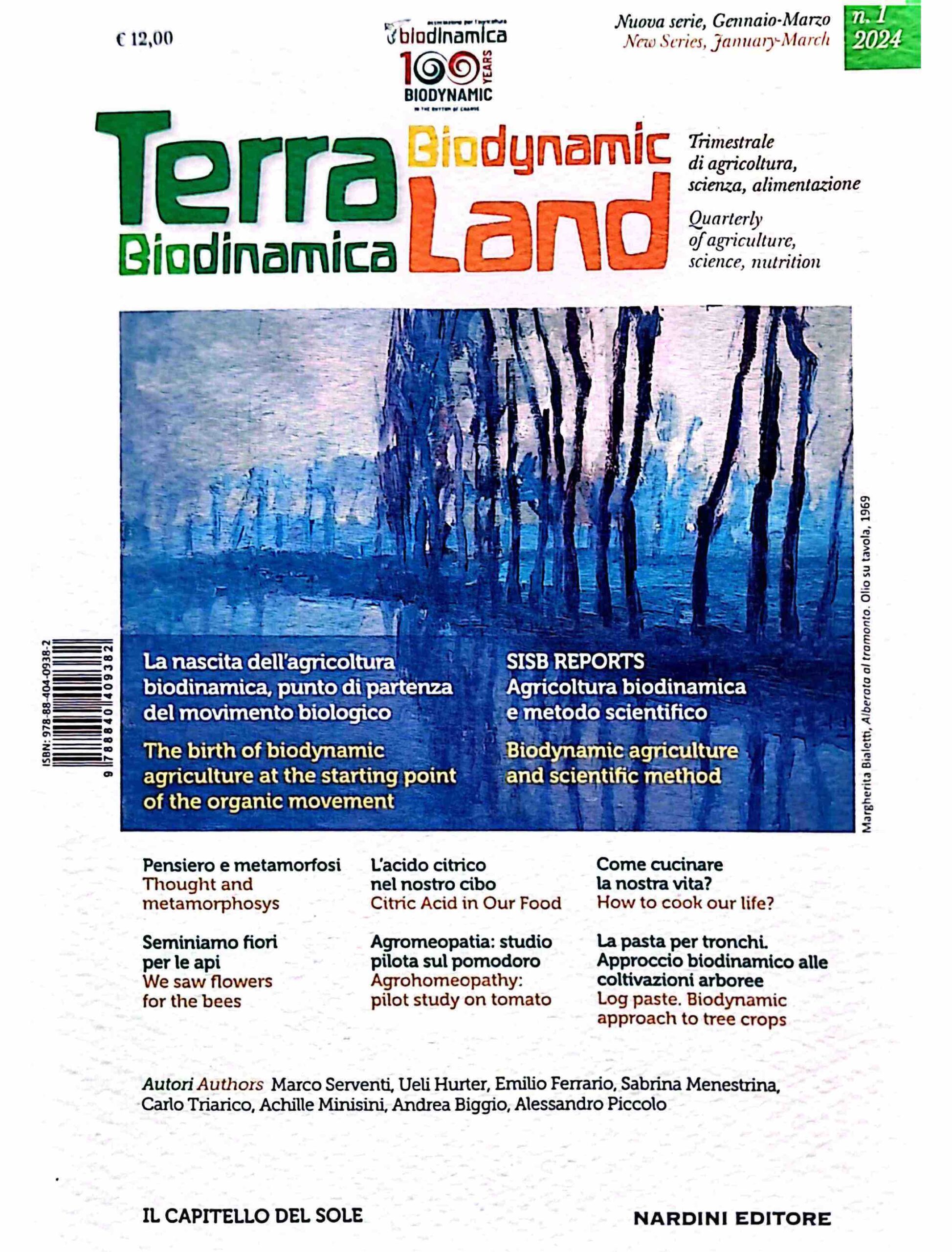
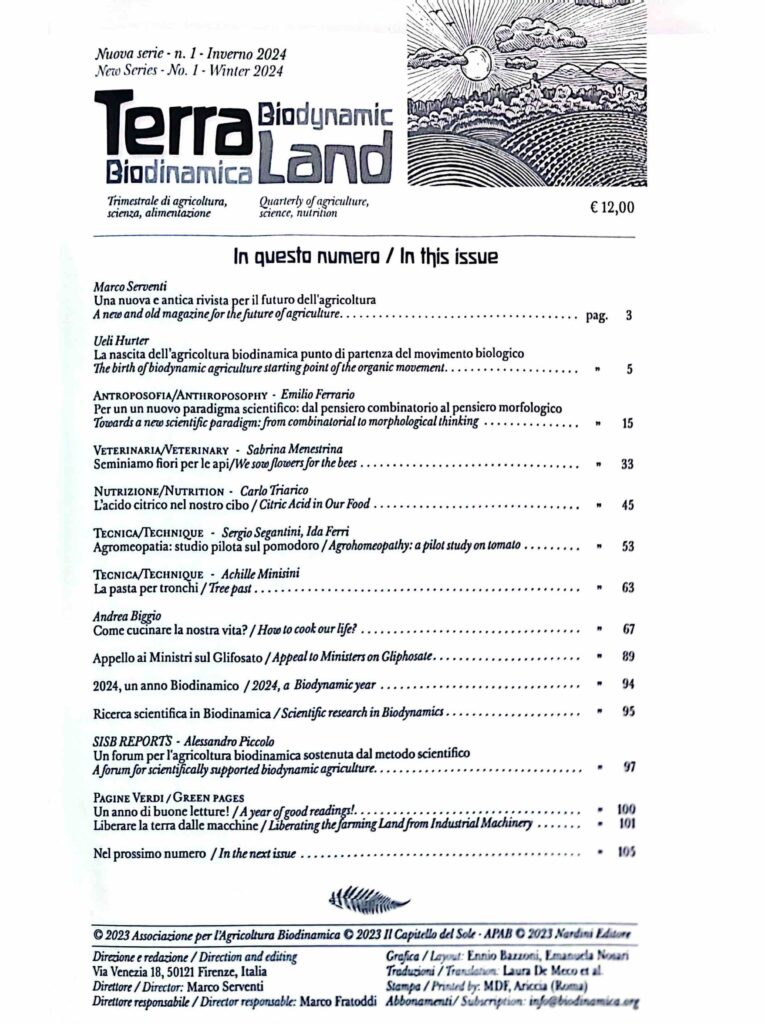
This issue launches the completely renewed series, published by Il Capitello del Sole in collaboration with Nardini Editore, featuring all original and authoritative articles. A special edition for the 100th anniversary of biodynamic agriculture. The first issue was presented the day after printing at the world biodynamic agriculture conference at the Goetheanum in Dornach. A resounding Italian success, showcasing the Association for Biodynamic Agriculture’s ability to network with the entire agroecological, scientific, and cultural world—not just anthroposophical. The authors are: Marco Serventi, Ueli Hurter, Emilio Ferrario, Sabrina Menestrina, Carlo Triarico, Sergio Segantini and Ida Ferri, Achille Minisini, Andrea Biggio, Alessandro Piccolo. The cover painting is by Margherita Bialetti.
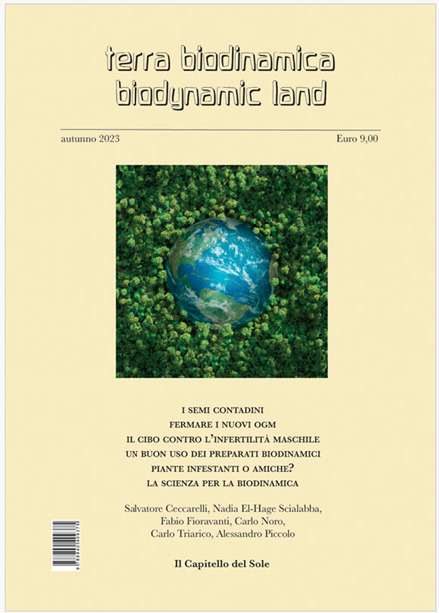
In October 2023, issue zero was launched as a preview and joyful announcement of the return of Terra Biodinamica.
An issue that somewhat echoes the style of the magazine’s last issues from 1995, featuring prominent articles by: Nadia El-Hage Scialabba, Salvatore Ceccarelli, Fabio Fioravanti, Carlo Noro, Carlo Triarico, and Alessandro Piccolo.